Why Good Design Outlasts Every Trend | 5BYFIVE Creative
In the fast-paced world of design, trends are often a tempting shortcut to relevance.
Listen to this blog post:
We’ve all seen it happen.
A new visual style emerges, it breaks the rules in a fresh way, and suddenly, it’s everywhere. From tech startups to local coffee shops, the aesthetic spreads like wildfire until the very thing that made it unique becomes its downfall, and it starts to feel like everything else.
Taking a closer look at the lifecycle of a trend, it becomes clear why chasing the latest look can turn into a trap for your brand.
The Dilution of Impact
Trends typically follow a predictable trajectory.
They start with a bold move, breaking with a convention, zigging when everyone else zags, creating a visual spark that feels genuinely unique. Naturally, others want to emulate that success. However, more and more people adopt the style, and pretty soon it’s not unique anymore and becomes another homogenized look alongside everyone else.
But Trends Are Not the Enemy of Good Design
Good design pays attention because trends show where visual language is moving and what feels current to audiences.
The risk comes when a brand leans too heavily on a trendy look without enough strategy underneath it.
What feels fresh today can feel dated quickly once the market shifts.
Strong design finds the balance. It borrows what feels relevant, filters it through the brand’s personality and purpose, and builds something with enough staying power to evolve.
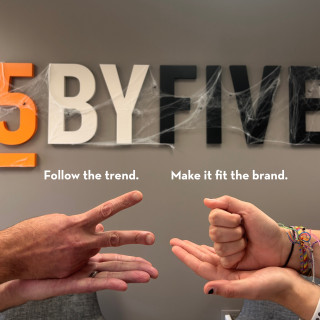
That is the difference between trendy and timeless. Trendy follows the crowd. Timeless understands where the crowd is headed, then moves with purpose.
The Shift from Corporate to Human
Trends can be born out of necessity.
For years, corporate minimalism has been the trend. This was a functional choice to accommodate tiny smartphone screens and design for the limitations of social media platforms.
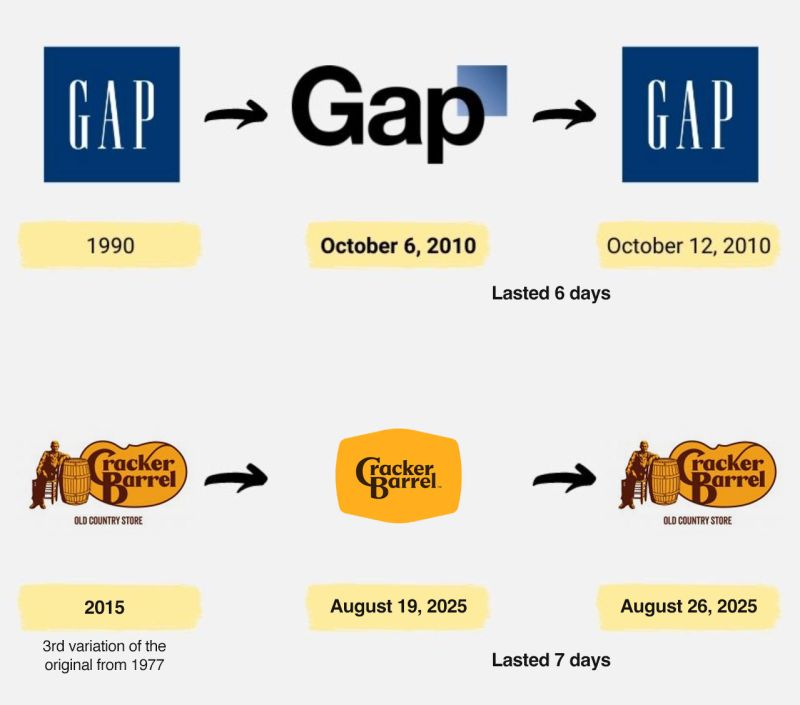
Think of the GAP or Cracker Barrel (both shifting back to their original identities).
As our digital landscapes filled with sleek, sterile symbols, a pushback began.
When too many brands start using the same clean lines, minimal marks, and hyper-polished design systems, everything can begin to feel a little too similar. That sameness has encouraged brands to explore new ways to stand apart from the crowd.
This pushback is showing up in a movement toward design that feels more human and handmade. People are gravitating toward more tactile expression because it offers a sense of personality and uniqueness that sets it apart from the hyper-clean, digital-forward trend that has dominated until now.
But personality and reinvention need to be handled with care. The Gap and Cracker Barrel logo redesigns are useful reminders: when familiar brand cues disappear too quickly or too completely, you can lose your audience.
The opportunity is not to abandon what people recognize. It is to evolve with intention, bringing in warmth, character, and distinctiveness without losing the equity that made the brand recognizable in the first place.
Of course, at some point in the future, we might see a completely new direction in design, or things might just revert to a cleaner look. Which brings me to the next point…
The Cyclical Nature of Style
Design often mirrors fashion and culture in that it is cyclical.
For a cultural example, let’s use the history of NBA basketball shorts as an example.
In the 60s, shorter styles were the standard. Then, in the 90s, the Fab Five of the Michigan Wolverines brought long, baggy shorts into the mainstream alongside hip-hop culture, and that became the standard. But then, shorter shorts became the style once again in the late 2010s. Today, we’re seeing a shift back to the baggy look.
We see the same trend cycle in design.
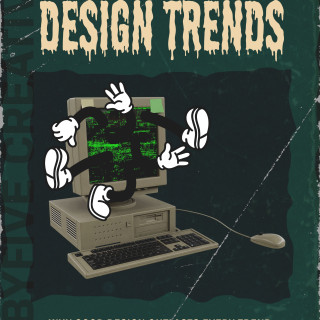
Right now, there is a resurgence of “rubber hose” style characters, the bendy-limbed, big-eyed, glove-wearing figures made popular in early 20th-century animation. Think Felix the Cat, Betty Boop, early Mickey Mouse, and the whole charmingly weird world of vintage cartoons. Designers are pairing these nostalgic characters with updated color palettes and vintage typography. It’s a direct response to the clean and geometric feel of the last decade.
If you understand how and why design trends change, you have a better chance of using them wisely. It’s one of the main ideas we learn from studying history in school: learn what came before so you can borrow what feels current without building something that feels outdated the moment the trend moves on.
Design That Never Goes Out of Style
While it’s important to understand the current landscape, the goal shouldn't be to fit in, it should be to stand out. So the trick is, doing that in a way that lasts. Trends are fleeting, but a well-executed design still feels relevant over time.
True design success comes from:
- Purposeful Execution: Every element should serve an intentional purpose, not just be a vibe.
- Audience Connection: Feeling is better than flash. Design that makes people feel something tends to stay with them both emotionally and intellectually. Flash can turn heads, but feeling is what keeps people thinking about the brand after the first impression is gone.
- Unique Problem Solving: Every brand has a different set of challenges. A trendy solution is rarely a sustainable answer for any given problem.
At 5BYFIVE Creative, we like to ask, listen, then create.
The important question to ask is not just, “What’s popular right now?” It is, “What will still feel right five or ten years from now?” That does not mean ignoring current design trends. It means using them with intention, in service of the brand’s goals, voice, audience, and position in the market.
Design should not chase attention for attention’s sake. It should help express who the brand is, what it stands for, and why people should trust it.
When you focus on the core issue and intentionally execute a design with precision, that’s when a brand has its best chance to be a reliable and trustworthy constant in the ever-changing landscape of their industry and across marketing.
Derek Page